
Bra Styles Explained: Plunge, Full Cup and Balconette – What's the Difference?
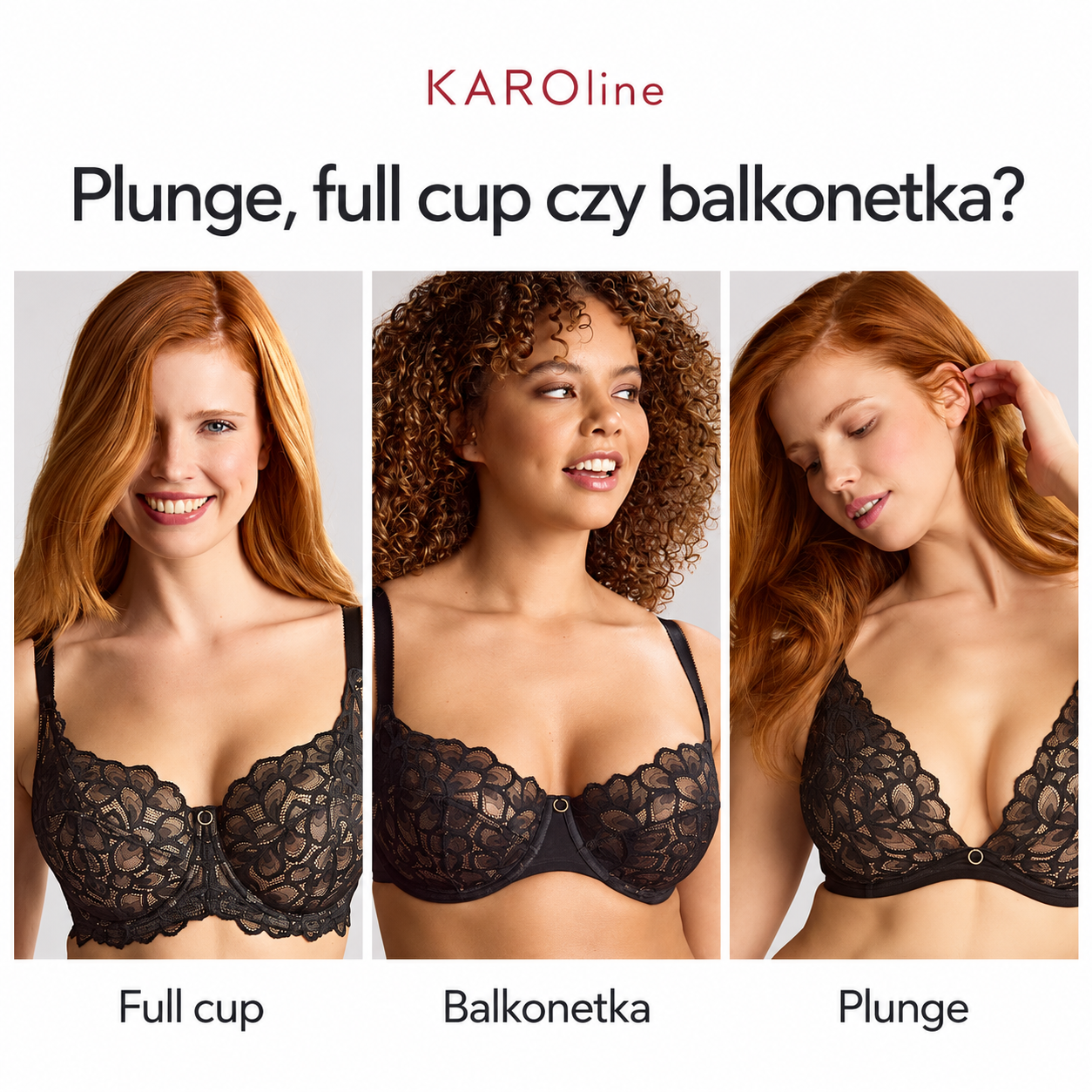
Plunge, full cup, balcony, balconette – bra style names can be confusing, especially as different manufacturers don't always use them in exactly the same way. In our fitting room, customers are more likely to describe what they want than ask for a particular style: “I want my breasts to be fully covered”, “I need something for a low neckline”, “I don't like bras that cover too much” or “I'd like a little more lift”. In this guide, we explain the differences between popular bra styles, how they can affect breast shape and support, and why the style name alone won't tell you whether a bra will fit well.
What makes one bra style different from another?
A bra style is partly defined by the shape and coverage of its cups and the height of its centre gore – the section between the breasts. But the construction of the cups matters just as much: the number and direction of seams, the stretch of the fabric and any additional support panels all influence how a bra fits and shapes the bust.
That's why two bras described as plunge styles can look and feel quite different. The same applies to balconette bras. Some have lower-cut cups with a more open neckline, while others offer considerably more coverage.
There is no single construction that suits everyone wearing a similar size. Breast shape, firmness, position on the chest and personal preferences all play a part in finding a comfortable fit.
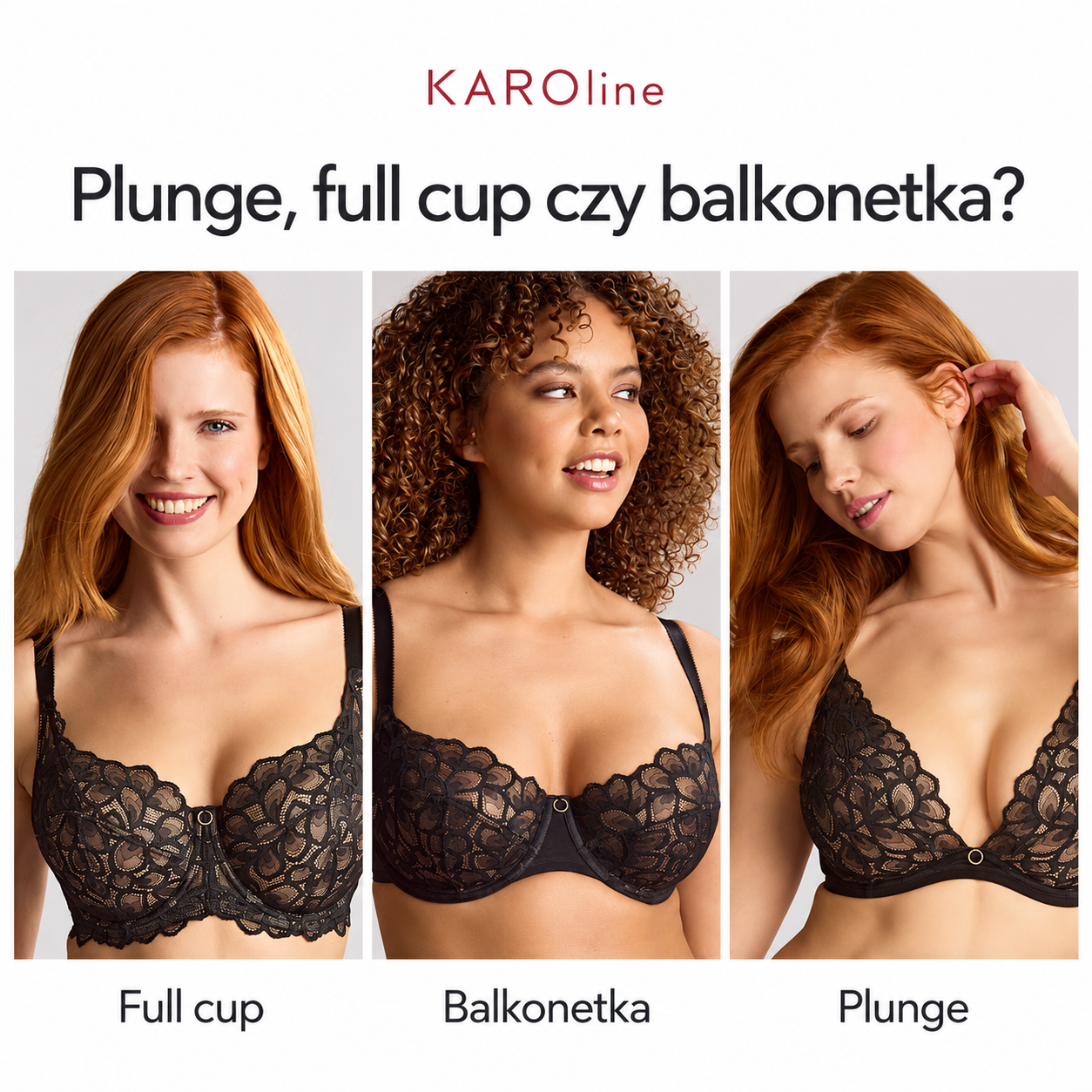
Plunge bras – a lower centre gore and a more open neckline
The defining feature of a plunge bra is its low centre gore. The underwires finish lower between the breasts than they do in many full cup designs, leaving the centre of the bra less covered. This makes plunge bras a popular choice for lower necklines, but that's not their only advantage.
A plunge bra may also be worth trying if taller underwires press uncomfortably against your breastbone. A lower centre gore can feel more comfortable for some people. However, pressure in this area can also be caused by an unsuitable size, the width or shape of the wires, or the construction of a particular bra.
Can a plunge bra support a larger bust?
Yes. A well-fitting plunge bra can provide good support for a fuller bust. It's worth knowing, though, that plunge bras designed for larger cup sizes are not necessarily extremely low-cut. Manufacturers adapt their constructions to different size ranges, so an Elomi plunge can look quite different from a delicate, deeply cut plunge designed for a smaller bust.
Elomi Matilda and Elomi Lucie are good examples. Both have a lower centre gore, but their upper cups are constructed differently. Lucie has a stretch upper cup, which may accommodate certain differences in breast shape more easily. Matilda does not have the same stretchy upper-cup finish.
Panache Ana is another well-known example of a plunge bra. Freya also offers a wide range of plunge styles, including high apex designs, where the cup extends higher towards the shoulder strap.
When might a plunge bra not work so well?
For softer, less firm breast tissue, some very low-cut plunge designs may not provide enough coverage. When bending forward, the breasts may move towards the centre or begin to slip out of the cups.
That doesn't mean softer breasts and plunge bras are an unsuitable combination. The height of the cups, their construction and how securely they hold the breast tissue all matter. When trying on a plunge bra, it's worth doing more than standing in front of the mirror: bend forward and move around to see how it behaves.
If you're looking for a lower centre gore, explore our plunge bras.
Full cup bras – when you prefer more coverage
A full cup bra has fuller, more covering cups. The upper part of the cup generally reaches higher, covering more of the breast. This type of construction often appeals to customers who tell us they like their breasts to feel fully covered and securely held within the cups.
But that doesn't mean every full cup bra looks the same, or that it has to feel heavy, rigid or uncomfortable. The fabrics, the cup construction and the fit all influence comfort.
How much coverage does a full cup bra provide?
Elomi Morgan and Elomi Cate are good examples of the differences within this style. Morgan provides generous coverage, but Cate has an even higher, more covering upper cup. Both may appeal to someone who prefers more coverage, although they differ in how they enclose and shape the breasts.
Among Panache styles, Allure Full Cup and Evangeline are worth comparing. They show how bras within the same broad style category can differ considerably in appearance and construction.
Freya Viva is another example of a full cup design.
Do all full cup bras give the same breast shape?
No. Full cup mainly describes the amount of coverage provided by the cups, not the final breast shape. Many full cup bras provide noticeable lift and shaping, but the effect varies depending on the construction.
Panache offers some useful examples. Allure Full Cup may create a rounder shape, while Envy or Serene can project the breasts further forward, sometimes producing a more pointed profile. This isn't a design flaw – some customers prefer that shape, while others like a rounder appearance.
The result also depends on individual breast shape and tissue firmness. That's why, in our fitting room, we pay attention not only to whether a bra fits correctly, but also to whether the customer likes the shape it creates.
You can compare more examples in our full cup bra collection.
Balcony and balconette bras – what's the difference?
This is where terminology becomes particularly confusing. Manufacturers use the terms balcony, balconette and sometimes demi for different constructions, and there isn't always a clear dividing line between them.
A classic balconette is often thought of as a bra with a lower upper-cup edge and a more open neckline. Certain designs lift the breasts and emphasise their upper fullness. However, some bras labelled as balcony styles have relatively high cups and offer more coverage.
Some balconette bras create a rounded, lifted shape, almost as though the breasts were resting in two little baskets. It's a useful way to describe the effect that certain constructions can produce, but it certainly doesn't apply to every balconette bra.
Why can two balconette bras create very different shapes?
Collections offering several bra styles are particularly useful for illustrating these differences. Panache Allure, for example, includes Full Cup, Demi and Plunge designs. Although they share the same collection styling, their cup shapes, coverage and support constructions differ.
Panache Envy is another interesting example. Its popular Full Cup design has features often associated with more open balcony constructions. The collection also includes a Plunge version, allowing you to compare different designs within the same range.
In Fantasie collections such as Marie and Magdalena, more decorative balconette designs appear alongside bras with side support panels. These balconettes may have more sheer detailing and are sometimes available in a smaller size range. They are different constructions, however, and can produce a different fit and breast shape.
Rather than relying only on the word “balconette”, it's worth looking closely at the individual design. You can also explore our balcony bras.
What about side support? Is it another bra style?
Side support refers to a panel at the outer side of the cup that helps support and shape the breast from the side. It isn't the opposite of plunge, full cup or balcony. Instead, it describes a particular construction feature that can be used in different bra styles.
When a customer tells us that her breasts tend to spread towards the sides, or that she'd prefer a more forward-facing shape, we often consider designs with side support. That doesn't mean every side support bra will produce the same result.
Fantasie Fusion is one example, and its soft fabric is one of the reasons customers appreciate it. The model shows that side support doesn't necessarily mean a stiff or padded cup.
We've explained this construction in more detail in our separate guide: What does side support mean in a bra, and how does it work?
An underwired bra is not the same as a padded bra
While discussing bra styles, it's worth clearing up another common point of confusion. Underwired and padded describe two different features of a bra.
Underwires are the structural elements running beneath and around the outer sides of the cups. Padding, on the other hand, relates to the construction of the cups themselves – for example, foam or other materials used to give the cups a particular shape.
A bra can therefore have underwires while still having completely soft, non-padded cups. In fact, many of the bras we offer are constructed this way, including plunge, full cup and balcony styles.
How do you choose the right bra style for you?
Rather than starting with a style name, think about what bothers you in your current bra and what you'd like to change. This is often a much more useful starting point.
Here are a few things worth considering:
- If taller underwires press against your breastbone, try a plunge bra with a lower centre gore,
- If you prefer greater coverage and want the cups to enclose more of your breasts, consider full cup designs,
- If you'd like to emphasise the upper part of your bust, certain balconette bras may be worth trying,
- If your breasts tend to move towards your sides, compare bras with side support panels,
- If your breasts slip out of the cups when you bend forward, check not only the style but also the size and cup coverage.
When trying on a bra, check that the underwires surround your breasts without pressing into breast tissue, that the centre gore sits correctly, and that the cups neither cut into your breasts nor gape in a way that suggests a poor fit. It's also worth sitting down, raising your arms and bending forward to see how the bra behaves when you move.
Remember that no particular style is automatically right for one specific group of women. Two bras in the same size can fit so differently that one feels comfortable while the other doesn't. That's why bra fitting is about assessing the individual construction, not simply choosing a style name.
Frequently asked questions about bra styles
Are plunge bras suitable for a larger bust?
Yes. A plunge bra is defined primarily by its lower centre gore, not by a lack of support. Designs made for larger cup sizes can have carefully constructed, supportive cups. The fit of the individual bra is particularly important when breast tissue is softer and moves more easily within the cups.
Are all full cup bras very covering?
Full cup bras generally provide more coverage, but the exact amount varies between models. Elomi Morgan and Cate show how much the upper-cup height can differ, even within this style category.
What's the difference between balcony and balconette bras?
There is no universally consistent distinction between these terms. Both are associated with styles that can emphasise the upper part of the bust, but the actual cup shape and coverage depend on the individual design. It's more useful to compare specific bras than to rely on the names alone.
A bra style is a starting point, not a guarantee of fit
Plunge, full cup and balconette are useful descriptions that help us understand what to expect from a bra. They don't tell us everything about comfort, support or the shape it will give the breasts.
From our experience in bra fitting, it makes more sense to start with your needs and then look for a suitable construction. Sometimes changing the style solves the problem; sometimes a different model within the same style is a better answer. What matters most is finding a bra that fits well, feels comfortable and provides the support and shape you want.
